Feature: Gabriel Bortoleto and Brazil's long road back to Formula 1

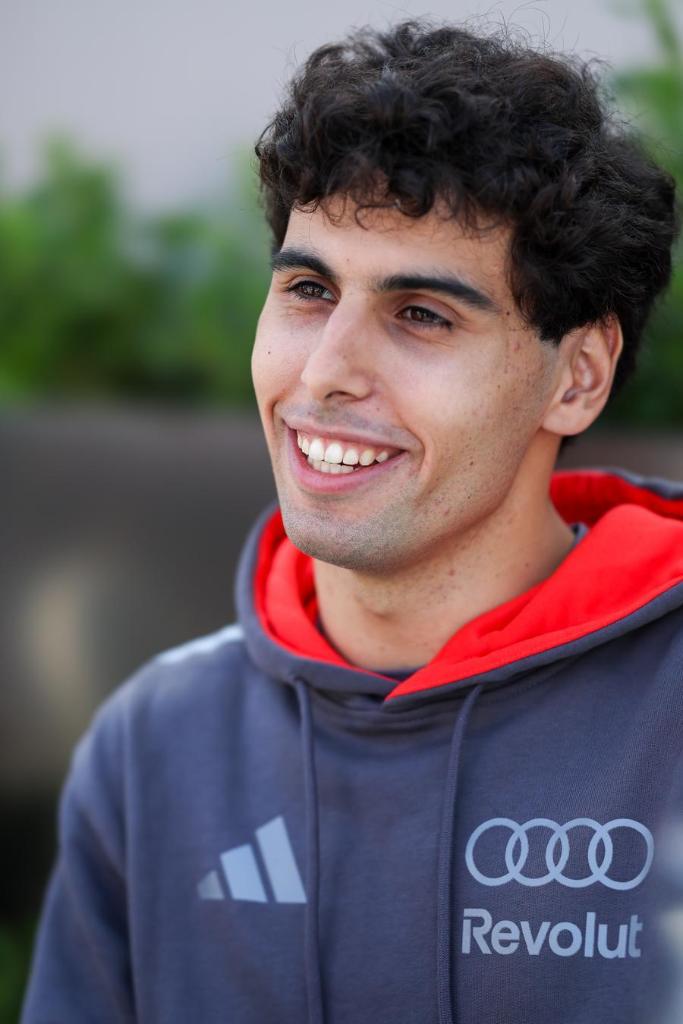
After a seven-year absence, Brazil has a driver on the Formula 1 grid again, with Gabriel Bortoleto carrying the hopes of a proud racing nation. He tells Xinhua about carrying Brazil's racing heritage, the inspiration of Ayrton Senna and the expectations that come with arriving in F1 as a back-to-back junior champion.
by F1 correspondent Michael Butterworth
SHANGHAI, March 14 (Xinhua) -- For a country that once treated Formula 1 like a second religion, Brazil's absence from the grid had begun to feel strangely normal.
Between the days of Ayrton Senna, Nelson Piquet, Rubens Barrichello and Felipe Massa, Brazil regularly churned out F1 champions and race winners. Grand Prix Sundays were national events, as Interlagos became a cathedral of noise and emotion. The idea that the country might one day have no driver on the grid seemed absurd.
Yet by 2018, for the first time since 1969, Brazil had disappeared from F1 entirely.
The drought lasted seven years, save for a couple of stand-in drives for Pietro Fittipaldi in 2020. Then Gabriel Bortoleto arrived.
Now in his second season in the sport, the young Brazilian finds himself juggling the dual role of promising prospect and national standard bearer.
That expectation is heightened by the path that brought him to F1. Bortoleto won the Formula 3 and Formula 2 titles in successive seasons, placing him in rarified company and marking him out as one of the sport's most closely watched young drivers.
"It's a big responsibility," he tells Xinhua. "Brazil has had great drivers in F1. For me it's about starting my career now and hopefully fighting for wins and championships in the future, and making my country proud in a sport where they have been so successful in the past."
Bortoleto is realistic about where he stands today. An encouraging season-opener in Melbourne for the nascent Audi team led to a ninth-place finish, but the victories Brazil once expected every season are still a distant ambition.
Still, even the mere presence of a Brazilian driver on the grid carries symbolic weight. In a country where Senna remains a near mythological figure three decades after his death, any new arrival inevitably becomes part of a story much larger than themselves. Bortoleto grew up in that shadow, even if he never saw Senna race.
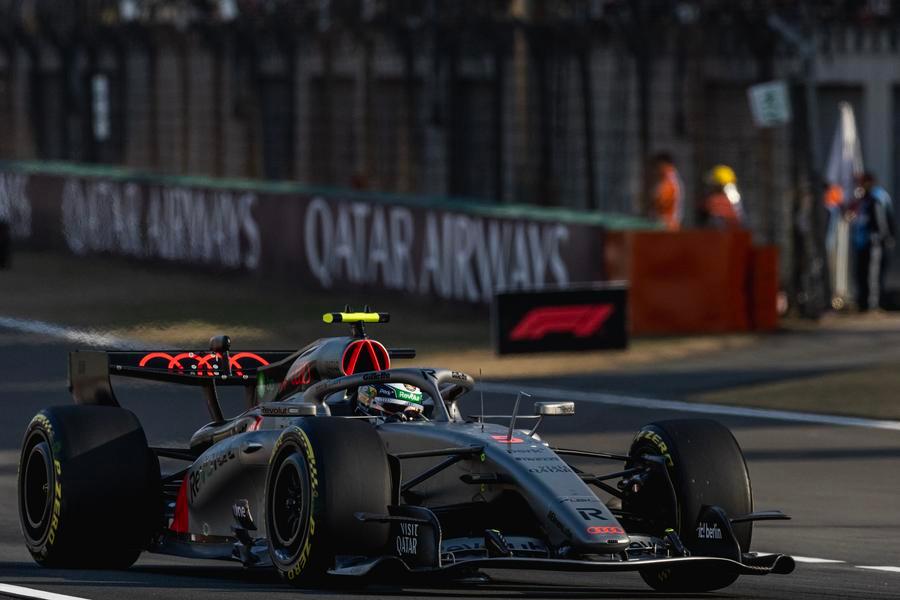
"My idol was always Senna," he said. "Obviously I wasn't lucky enough to watch him race because I was born ten years after he died, but there are so many videos and interviews you can learn from."
Like many Brazilian drivers of his generation, his early inspirations came through a mixture of history and proximity. While Senna has long been written into legend, Rubens Barrichello and Felipe Massa were the drivers he could actually watch, and the examples that made the dream feel real.
"They were always references," Bortoleto said. "Any Formula One driver is a reference when you're in karting. You look at them and think, they're in the best series available and you want to be like them."
Massa in particular offered occasional advice during Bortoleto's junior career - an informal thread linking generations of Brazilian racers.
"Felipe and I have been in touch for a few years. He was very helpful at many moments of my career with advice."
The more puzzling question is why the pipeline slowed down in the first place. Brazil has never lacked talent or enthusiasm for motorsport, yet the pathway to F1 narrowed dramatically in the past decade, in a state of affairs that Bortoleto struggles to explain.
"I don't really know," he shrugs. "I feel like there was just a gap of drivers trying to reach F1 or having the results to get there."
He points to Felipe Nasr, who spent two years in F1 for Audi's predecessor team Sauber, as one who might have prevented the drought had circumstances turned out differently.
"He was great. If he had stayed longer he could have been very successful and maybe that gap wouldn't have happened."
Nasr left F1 after a difficult 2016 season and has since carved out a successful career in the American IMSA series. Once Massa retired at the end of the following year, the Brazilian absence remained until Bortoleto arrived.
His emergence has coincided with a subtle revival of Latin American representation in F1. The 2026 grid also features Sergio Perez of Mexico and Argentina's Franco Colapinto, showing that the region's long-standing connection to F1 may be stirring again.
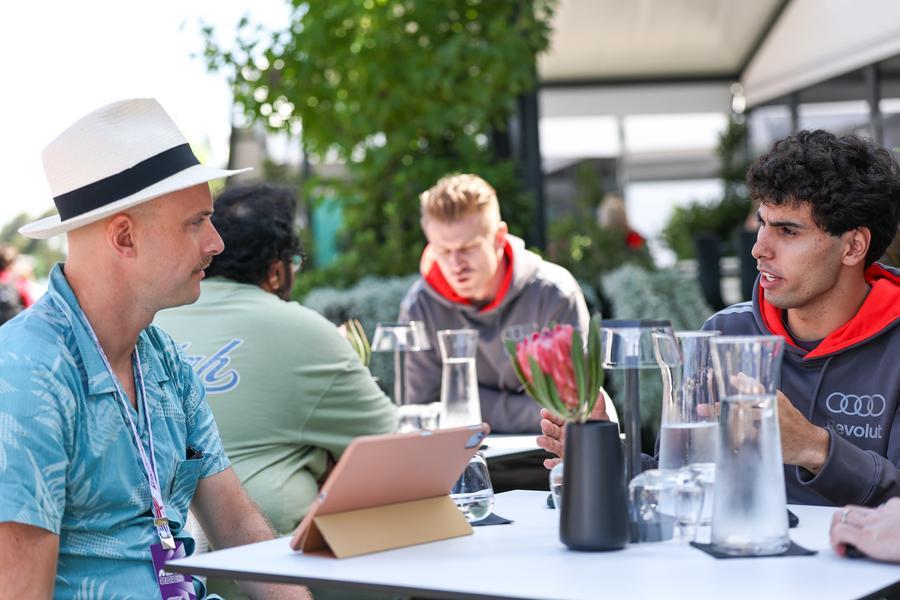
Bortoleto hopes that visibility translates into something more tangible.
"We have so many talented drivers in South America, especially in Brazil, who deserve the opportunity to grow in the sport and try to reach F1," he says.
The financial barriers to the sport remain steep, and young drivers from outside Europe often struggle to find the backing needed to climb through Formula 3 and Formula 2. Perez and Colapinto are both backed by a coterie of Latin American sponsors, and Bortoleto says greater opportunities could be in the offing.
"I think my arrival in F1 has already increased interest in Brazil. More interest brings more visibility, and sponsors become more willing to invest in young drivers."
While Bortoleto carries that broader significance for Brazil, his daily reality is more straightforward. He is still a young driver learning the demands of F1 while helping build a new project with Audi, one that will take time before it challenges at the front of the grid.
The process, he says, is about patience and steady progress.
"I'm not a rookie anymore, it's my second year in F1, so just keep progressing. I need to do the best I can on track. I don't need to prove anything to anyone," he says.■







Comments